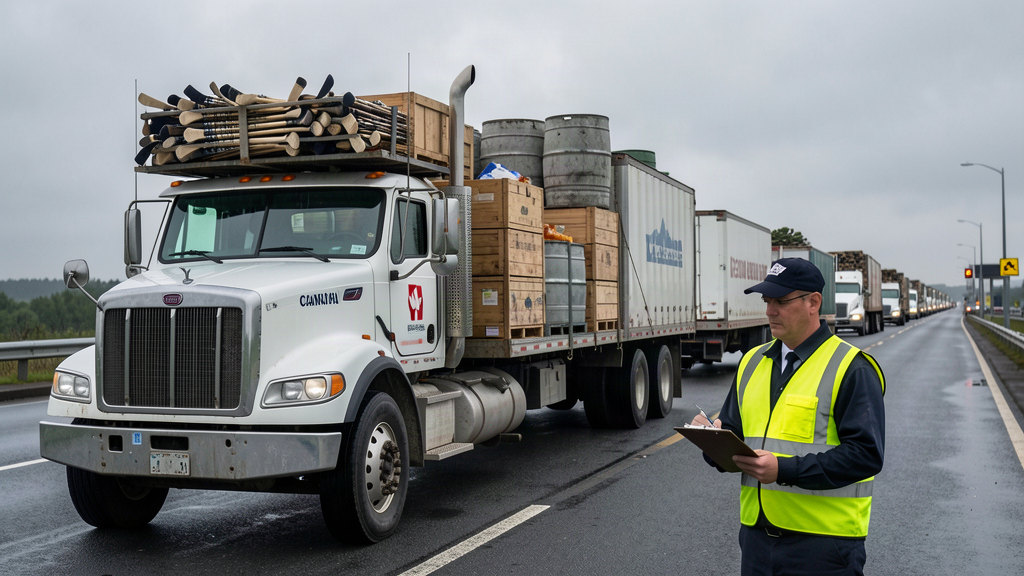
OTTAWA, ONTARIO — At 12:01 a.m. Eastern on Saturday, the United States switched on 50 percent tariffs on roughly $20 billion of Canadian goods, the largest single tariff in the history of the relationship, and it did so using a 96-year-old law that, until Saturday, had never in its entire existence been used to raise a tariff at all.
Section 338 of the Tariff Act of 1930 — part of the infamous Smoot-Hawley legislation — authorizes the president to slap import taxes of up to 50 percent on countries that discriminate against U.S. businesses. PBS NewsHour reports that the provision requires no investigation, carries no limit on duration, and, until this weekend, had no precedent. It is, in the words of one trade lawyer, “the letter in the drawer that everyone assumed was decorative.”
The covered goods read like a home-improvement catalog that wandered into a vineyard: hockey sticks, wine, cement, honey, seeds, agricultural products, select makeup, perfumes, clothing, jewelry, furniture, cameras, and fabric — including products previously protected under USMCA, a development that has caused the trade pact to acquire a new and very common nickname.
Prime Minister Mark Carney took the news in stride, which is to say he did not. Speaking Saturday in French, he declared, “It is clear that this is a new attack by the Americans against Canada… it is an attack in war. It is not a good choice,” before reminding the nation that “last spring I warned that America was trying to break us so it could own us. And I promised: ‘That will never, ever happen.’ We are keeping that promise.” He accused Washington of using “economic integration as a weapon” and announced that Ottawa will retaliate “dollar for dollar” beginning September 8, targeting steel, dairy, appliances, agricultural equipment, pulp and paper, and electronics.
THE CANADA FILE: OFFERS & RESPONSES, 2026
- Spring: Comprehensive deal offered → "Let us consult the provinces."
- July: 10 percent tariff takes effect (forced-labor claim) → "Disappointing."
- August 19: Steel and aluminum halving proposed → "Under study."
- August 21: Talks suspended → "Attacked."
- August 22: 50 percent takes effect at 12:01 a.m. → "Dollar for dollar, September 8."
- September 8: Ottawa retaliation (scheduled) → "To be announced."
The White House framing, meanwhile, is that nothing has gone wrong. Jamieson Greer, the president’s top trade negotiator, pledged additional counter-measures and maintained that the administration had offered to cut tariffs on steel, autos, and lumber — but that Canada, in his telling, “didn’t want” the deal. Officials in the room described the exchange as “a market signal of exceptional clarity,” and a senior advisor went further, calling tariffs “the clearest form of diplomacy. They don’t even require translation.”
The backdrop is a relationship in which Canada sent 72 percent of its goods exports to the United States last year, and in which a 10 percent tariff imposed last month — ostensibly for failing to prevent forced-labor imports — was followed by a Supreme Court that struck down some of the administration’s most sweeping levies in February. The legal team for the new tariffs is reportedly confident, which has reassured exactly no one, including the lawyers on both sides who were once the same firm.
At press time, the U.S. Trade Representative’s office was compiling an expanded list of Canadian goods for review, and maple syrup had been added “for consideration.” A trade lawyer who has handled border disputes for forty years described the current state of affairs as “not a negotiation. It’s a menu.”