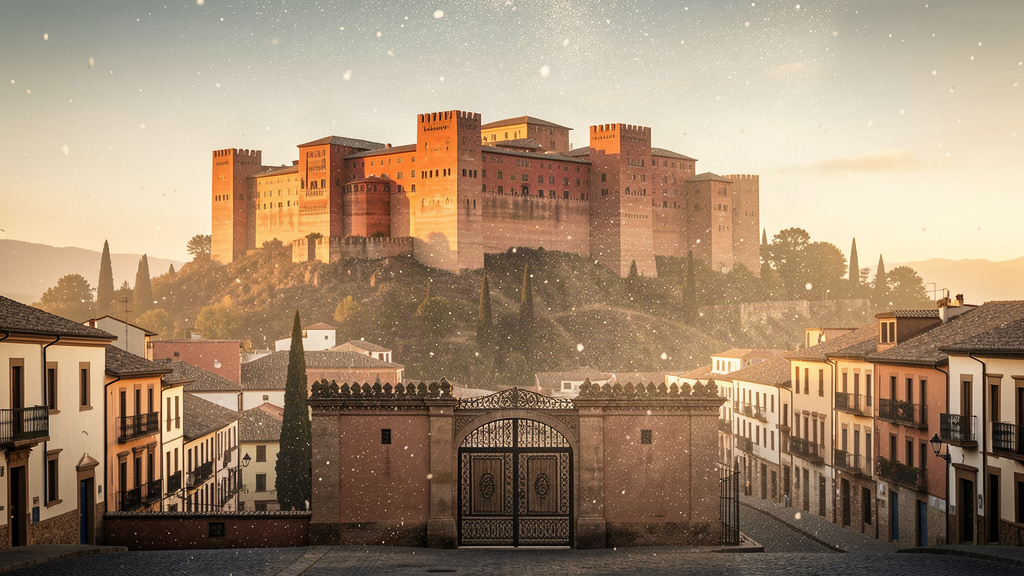
GRANADA, SPAIN — The Alhambra has outlasted the Moors, the Christians, a civil war, and at least one genuinely bad century of renovations, and this week it was brought down by the one opponent it never had to negotiate with: the ground.
A magnitude 5.0 earthquake struck Granada on Saturday, damaging homes and cars across the old city and forcing the palace-fortress — one of the most visited monuments in Spain — to close temporarily while inspectors went through it with clipboards. By Tuesday, the situation had developed a sequel. Three more tremors were recorded in the province, debris fell from old buildings, three people were lightly injured, and the Alhambra shut its doors to tourists again, this time “precautionarily,” which is the word the Spanish use when they mean “we are waiting for the building to say something.”
The city’s architecture is the reason the closures keep happening and the reason the closures are, to the residents, barely news. Granada is a city of narrow streets and centuries-old stone, the same construction that has kept it beautiful for eight hundred years and that has, by the same mechanism, made it a very slow responder to tectonic plates. Buildings here are not so much structures as they are long-term arguments with gravity, and the argument has resumed.
The Alhambra’s closure is, in tourist terms, the equivalent of the Colosseum developing a cold. The site draws millions of visitors a year, and its ticket system is famous for being nearly impossible to get into, which has created a peculiar new queue in Granada: not the line to get in, but the line to hear whether the line will exist. Travel agencies in the city reported cancellations and a growing number of callers who described their question in one phrase: “¿Abre el jueves?” — Is it open Thursday?
Local officials, in the manner of officials everywhere, have been reassuring. The injuries are light. The damage is under assessment. Inspectors are working. The word “precautionary” has appeared in so many statements that it has acquired the energy of a weather front. What has not yet appeared, as of Tuesday evening, is a word for the situation that is not “precautionary,” which is to say that the tremors have, so far, outlasted the vocabulary.
GRANADA, BY THE NUMBERS
- Saturday's earthquake: magnitude 5.0
- Tuesday's tremors: three, in the province
- Injuries: three, described as light
- Damaged: homes, cars, old buildings
- Alhambra: closed, "precautionarily"
- Also closed: several museums and sports facilities
- Tourists: in line, waiting to learn whether they are in line
The broader pattern, for the geologists, is the one that makes for a good headline and a bad sleep schedule. A magnitude 5 event followed within days by a cluster of smaller tremors is the sort of sequence that seismologists describe, with the precision of people who have described it before, as “ongoing seismic activity,” which is the scientific term for “we are still waiting for the fault to finish its sentence.”
Residents, by contrast, have not needed new vocabulary. They have had it since Saturday. In a city this old, the earthquake is not a breaking story. It is a standing appointment.
At press time, the inspection of the palace had not been completed, the province had not been declared, and the geologists had not been asked a question they had not already answered: yes, it is ongoing.