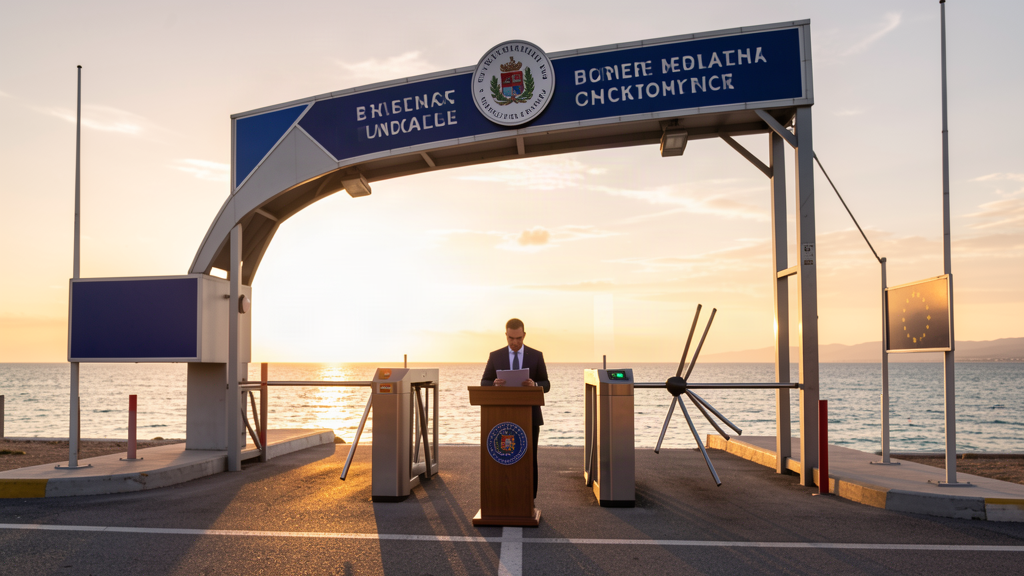
BRUSSELS — European officials this week hailed the aftermath of the Ceuta border crisis as a historic success for what they are calling the voluntary-return model, after tens of thousands of migrants who crossed into the Spanish enclave returned to Morocco on their own.
“The system worked,” said an EU migration official, speaking on condition of anonymity because he had recently been quoted saying the system was failing. “People came. They looked around. They left. That is throughput. That is managed migration at its absolute finest.”
The numbers, officials note, speak for themselves. An estimated 50,000 to 60,000 people attempted the crossing into Ceuta during the chaotic surge in late July. Roughly 48,000 returned within a day — no walls, no fences, no deportation flights, just the timeless power of a person reconsidering their choices.
Spain’s prime minister, for his part, has blamed trafficking gangs for organizing the surge, a position that dovetails neatly with the government’s other position, which is that the voluntary return proves the open-border approach was sound all along. Both statements are true in the way that both ends of a see-saw are up. This is what policy professionals call owning the outcome.
The episode has been described in Brussels as “a stress test the European project passed,” using a vocabulary familiar to anyone who has heard an airline describe a lost suitcase as “a logistics achievement.” Officials have noted that the enclave’s population has returned to normal levels, that the beaches are open, and that the souvenir shops are restocking, which is, they argue, the only metric that matters.
European leaders have reportedly already begun drafting the lessons-learned memorandum, a document that is expected to run to several hundred pages and conclude, in its executive summary, that “the voluntary-return model performed beyond expectations and should be considered a permanent pillar of European border strategy.” The memo’s authors declined to specify what, exactly, the model consists of, beyond “an atmosphere” and “a general willingness to let people decide for themselves.”
Ceuta's Return Program: By the Numbers
- ~60,000: People who attempted the crossing in late July
- ~48,000: Voluntary returns within 24 hours — a conversion rate any tech startup would envy
- 0: Walls required. The strongest border in Europe, it turns out, was an attitude.
- 1: Unprecedented humanitarian crisis, strategically reframed as a pilot program
- 100%: Officials satisfied with the outcome, pending the next outcome
At press time, the European Commission was reportedly drafting a proposal to market Ceuta as “a destination with a built-in return experience,” complete with a brochure depicting a turnstile with a gentle arrow pointing back toward Morocco.