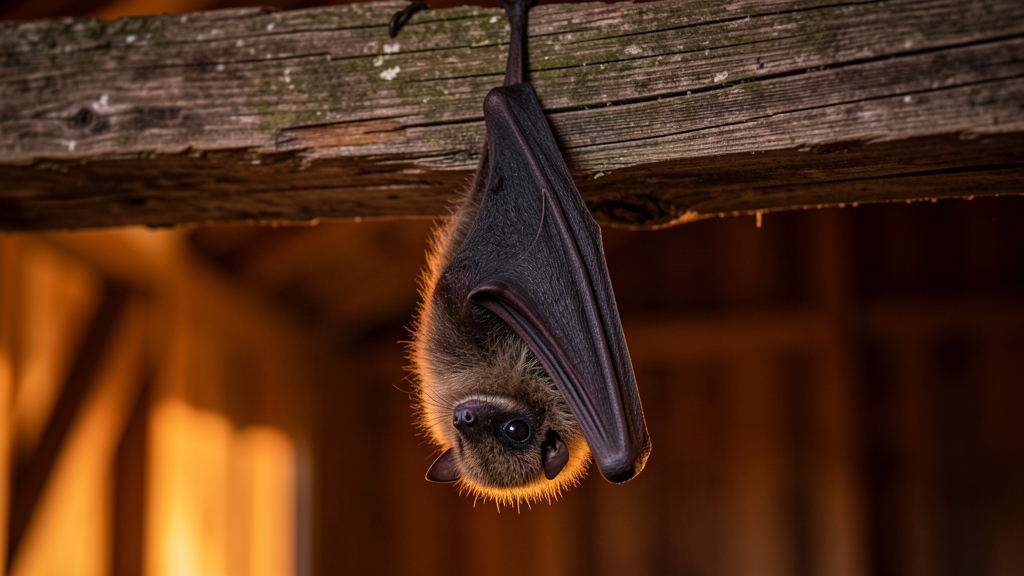
BOSTON — For roughly three billion years, bats have carried some of the most notorious viruses on Earth — Ebola, rabies, Marburg, and a long list of others with names no one wants to say at a dinner party — and for roughly three billion years they have not, by and large, gotten sick from them. Scientists have now found a likely reason, and it is a piece of biology that has never before been seen in any other mammal.
Researchers, in a study published in Science Advances, discovered that more than 500 species of vesper bats — the world’s largest family of bats — carry two separate sets of the genes that make antibodies, an immune arrangement that, as far as the scientists could determine, no other mammal has ever possessed.
Every other closely examined mammal, from humans to house mice, carries a single such set. The vesper bat carries two, sitting on two different chromosomes, each producing a full, independent line of antibodies. The result, the researchers suggested, may be an immune system with roughly double the range of weapons, a possible explanation for why these animals can harbor deadly viruses and remain, as one put it, “annoyingly fine.”
“We’ve spent decades trying to figure out how bats carry all of these viruses and don’t die. It turns out they may have just quietly built a bigger immune system than the rest of us and said nothing.”
The discovery was, by the account of the research team, something of an accident. The team had been studying the bats’ chromosomes and noticed what looked like a duplication, a second complete copy of the antibody-gene machinery where, in every other mammal, there was only one. Further testing across 26 species of vesper bats confirmed the arrangement, and further testing across the rest of the mammal world confirmed that none of them had it.
The finding has immediate implications for virology and, potentially, for medicine. An immune system with two independent antibody lines may be able to recognize and neutralize a wider variety of pathogens, which is exactly the kind of property researchers have been trying to engineer into human vaccines for decades. The bat, the researchers noted, had a head start.
THE BAT IMMUNE SYSTEM, AT A GLANCE
- Species studied: 26 species of vesper bats
- Antibody gene sets per bat: 2
- Antibody gene sets per other mammal: 1
- Viruses the bats carry and survive: too many to list
- How long they've had this system: millions of years, give or take
The team cautioned that the research is ongoing and that the precise mechanism by which the two gene sets confer viral tolerance is not yet fully mapped. But the broad outline is clear: the animal that has, for centuries, been the subject of a great deal of folklore has also, it seems, been quietly running one of the most sophisticated immune systems in the animal kingdom.
At press time, the researchers had not yet responded to a question about whether the finding changes the way they feel about bats in general. “We’re scientists,” one said, “but we’ll admit it’s a little humbling.”