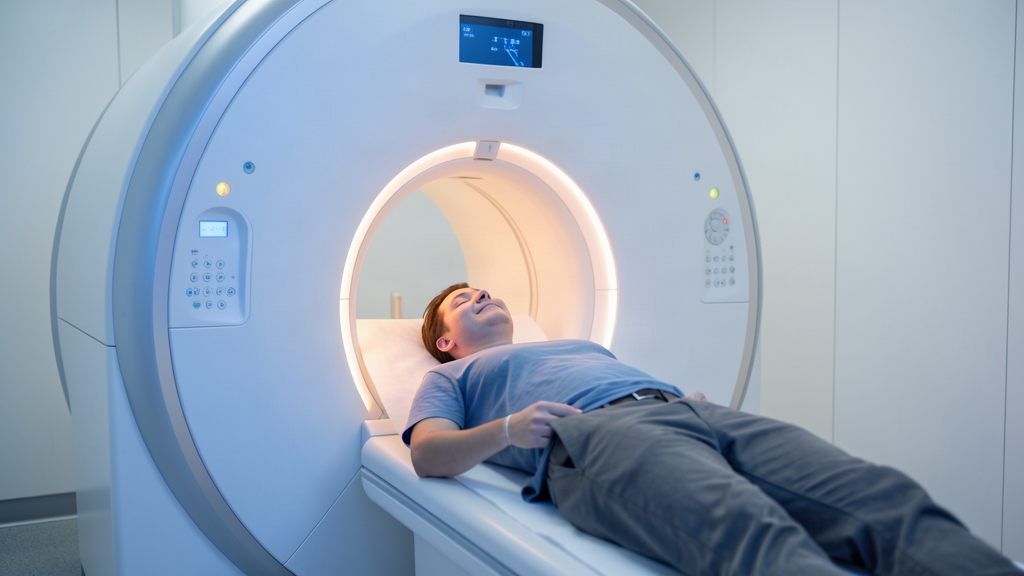
MELBOURNE, AUSTRALIA — Scientists at Monash University have published the largest single-site brain-imaging study of psilocybin ever conducted, scanning the brains of 62 healthy adults — all first-time users — before and after a moderate 19 mg dose, and doing so under four conditions: rest, meditation, ambient music with the eyes closed, and, in the study’s most ambitious condition, a silent video of moving clouds. The result, published in Nature, overturns a decades-old assumption: the psychedelic brain, far from being a mess, appears to be doing something the researchers have named “embeddedness” — quietly, measurably syncing with its surroundings, per The Conversation.
For decades, the working theory held that psychedelics disorganize the brain, dissolving its tidy networks into something like a desk after a storm. The new data suggest the opposite. Using fMRI, EEG, and machine learning to map brain activity over time, the team found that when participants reported feeling less separated from the world around them — the state the researchers term embeddedness — their brain activity literally aligned with the environment. The normal distinction between eyes-open and eyes-closed states collapsed by 85 percent in the visual network, regions involved in integrating the sense of self became more connected with the rest of the brain, and the whole arrangement was associated with reports of positive psychological change the following morning.
One participant, describing the experience in the study’s data, put it this way: “melding with the MRI machine, floor, walls and air.” Another described “losing all sense of self,” becoming at one with the surroundings. Half of the 62 participants reported having one of the most meaningful experiences of their lives. The researchers have confirmed, with data, what the MRI machines have apparently known all along: it is in there.
THE EMBEDDEDNESS PROTOCOL: OFFICIAL CONDITIONS
- Condition 1: Rest — "the baseline, for comparison"
- Condition 2: Meditation — "eyes closed, as usual"
- Condition 3: Ambient music, eyes closed — "the condition participants rated most meaningful"
- Condition 4: A silent video of moving clouds — "the researchers' most ambitious condition"
- Dose: 19 mg, a moderate amount
- Placebo group: None — "everyone knew what they had taken, for transparency"
- Participants: 62 healthy adults, none with prior experience
The context, it turns out, is not a side note — it is the finding. Participants rated listening to music under psilocybin as substantially more meaningful and emotionally resonant than listening to it sober, and the embeddedness signature was strongest when the self-world boundary thinned, weaker for visual effects alone, and absent entirely when participants reported confusion or anxiety. Half the cohort had completed an eight-week mindfulness course, and at the group level their brains did not measurably differ from the others — a result that has not, the researchers note, discouraged either group.
The study has limitations, by its own account: healthy adults, not patients; an open-label design in which everyone knew what they had taken; and wide variation in responses despite the fixed dose. The researchers are now testing whether the signature appears in clinical patients, whether preparation and setting can be dialed like a dial, and whether it can predict who benefits from treatment. The full dataset — the world’s largest single-site psychedelic imaging archive, now publicly available on OpenNeuro — has already attracted its first outside reanalysis, which, per its title, is called “More Clouds.”
At press time, the research team was reportedly discussing adding a “stand-up comedy” condition to the follow-up study, and the MRI vendor was “in principle open” to licensing agreements for “machine-melding experiences.” One lab technician, asked about the scanner’s feelings on the matter, declined to comment but added, “it’s been a good run.”