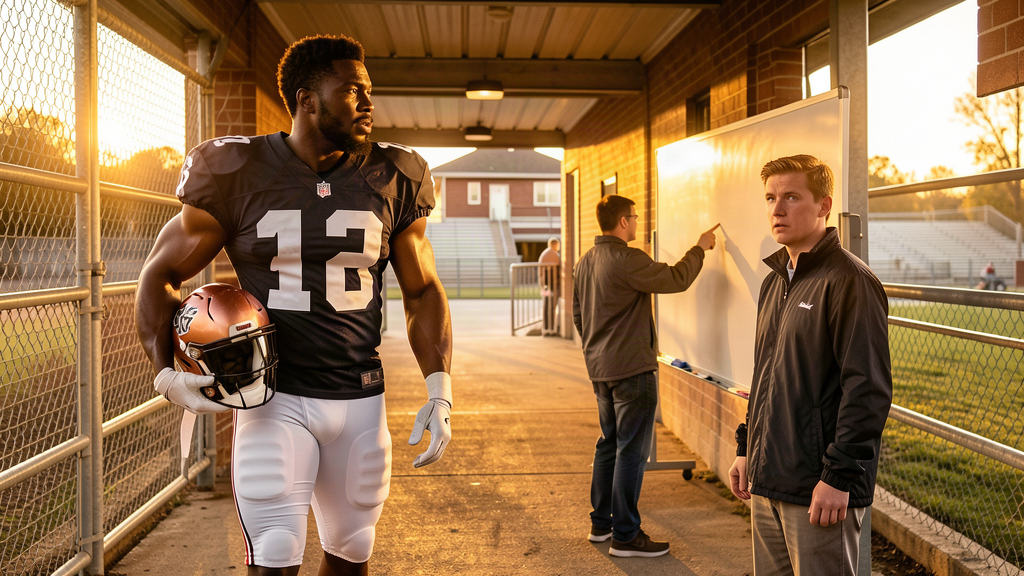
BATON ROUGE, LA. — Somewhere between “the transfer portal” and “a very aggressive recruiting cycle,” American college football invented a new sport: the retrograde draft.
After a Louisiana judge’s temporary restraining order gave roughly 16 football players from the 2022 class a fifth year of eligibility — several of them while still in NFL training camp — LSU head coach Lane Kiffin has turned pro training camps into his latest recruiting ground. The first active NFL player to enter the portal was a wide receiver named Daequan Wright, and he did it with the kind of logistical confidence that suggests he had been watching the eligibility rules like a man with a personal stake in the outcome.
The SEC responded on Monday with a statement that the association’s presidents and chancellors “should not then be permitted to return to college competition,” a position Kiffin, when asked, described as “not mine.”
The situation has produced a new tier of coaching, one that operates somewhere between a head coach and a talent scout with a state ID. A recruiting analyst who has followed the situation described the new landscape as “a draft, but in reverse, and with more eligibility paperwork,” and added that the 2022 class is now the most valuable recruiting class in the history of the sport, a claim the class has not disputed.
The legal mechanism is, by any reasonable accounting, a back door. A Louisiana judge’s order, issued last week, allowed the players to return for a fifth season and barred the NCAA from enforcing the usual rules, which is how the sport describes a window that opened because a court, in Baton Rouge, said the door was a door and not a wall.
THE RETROGRADE DRAFT: KNOWN FACTS
- Players eligible under the court order: 16 (some currently in NFL training camp)
- First active NFL player into the portal: Daequan Wright
- Teams reportedly circling: LSU, among others
- SEC position: "College sports are for college athletes"
- Kiffin's position: "I don't think I'm unique"
- New job title, effective immediately: Retrograde Recruiter
At press time, the NCAA said it would “continue to evaluate its options,” and one conference official, speaking on the condition of anonymity, said the situation was “exactly the kind of thing the transfer portal was never meant to do,” which is the conference’s way of saying someone has found a use for it that exceeds the original spec sheet.